5 Reasons Parents, Grandparents & Homeschoolers Can’t Get This Comic-Style Encyclopedia Out Of Their Kid’s Hands
If you’ve got a kid who lights up for a screen but goes quiet around a book, you already know the feeling. You buy the “good” educational thing, full of hope… and three weeks later it’s on the shelf gathering dust while the iPad gets the death-grip.
So when parents kept telling us the same thing about 100,000 Whys — “I can’t get this out of my seven-year-old’s hands” — we wanted to understand why this one is different. Here are the five reasons that kept coming up.
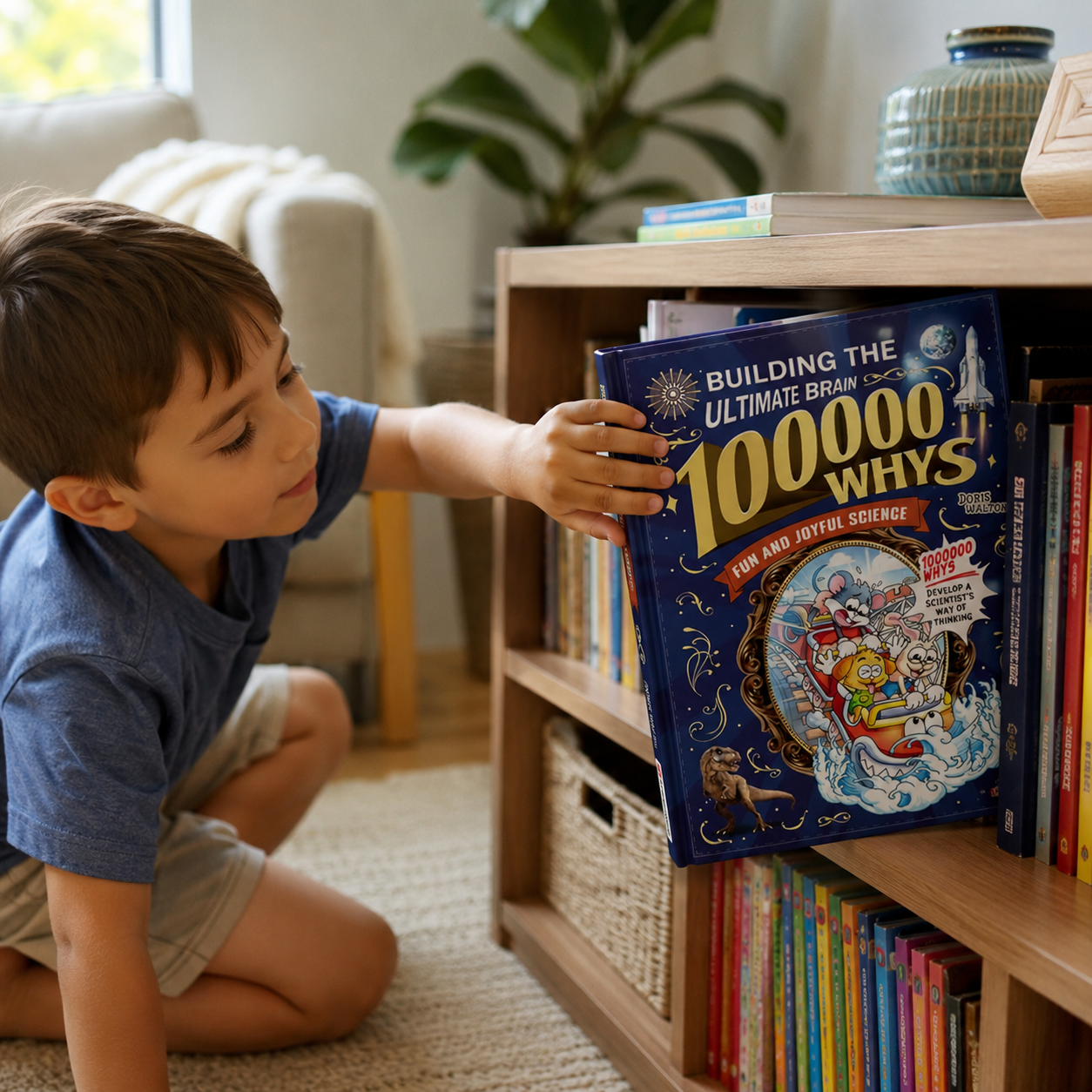
Here’s the honest fear before you buy: “it’ll just sit there like the last one.” The reason this one doesn’t is the format. It’s built comic-first — a picture and a real question on every single page — so it competes with the screen on the screen’s own turf: visual, fast, fun to flip through. No “sit down and read for 20 minutes” ask. A kid wanders past it on the table, opens it to a dinosaur, and twenty minutes later they still haven’t looked up.
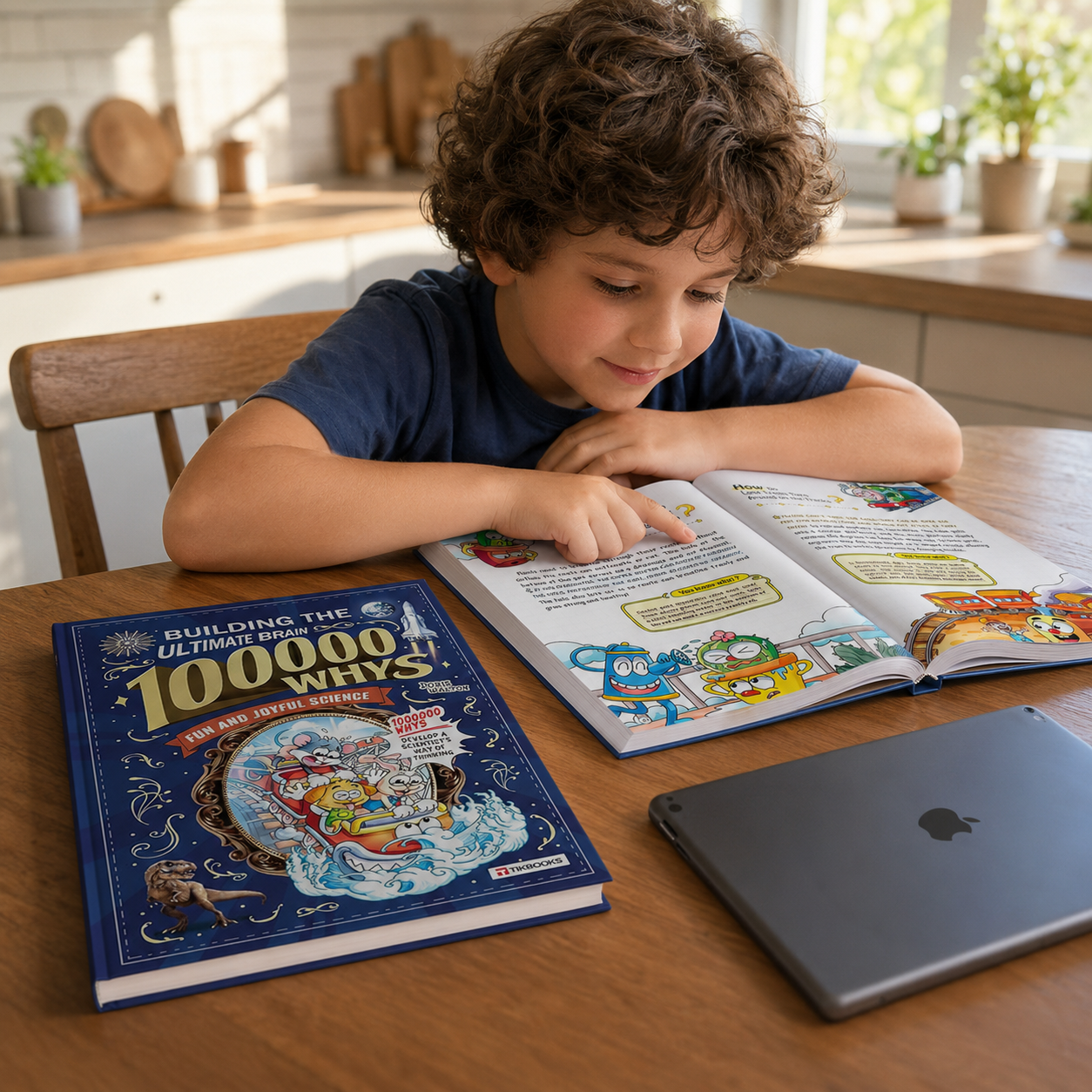
You’re not a bad parent for handing over the tablet — most of us do it on the hard days. The problem was never you; it’s that a screen is engineered to win, and a wall of text was never going to compete. This gives you something to put in that spot that a kid actually chooses. No countdown timer, no meltdown when it’s over, no “five more minutes.” We won’t pretend a book cures the pull of a screen — but having one thing they reach for instead changes the whole evening.
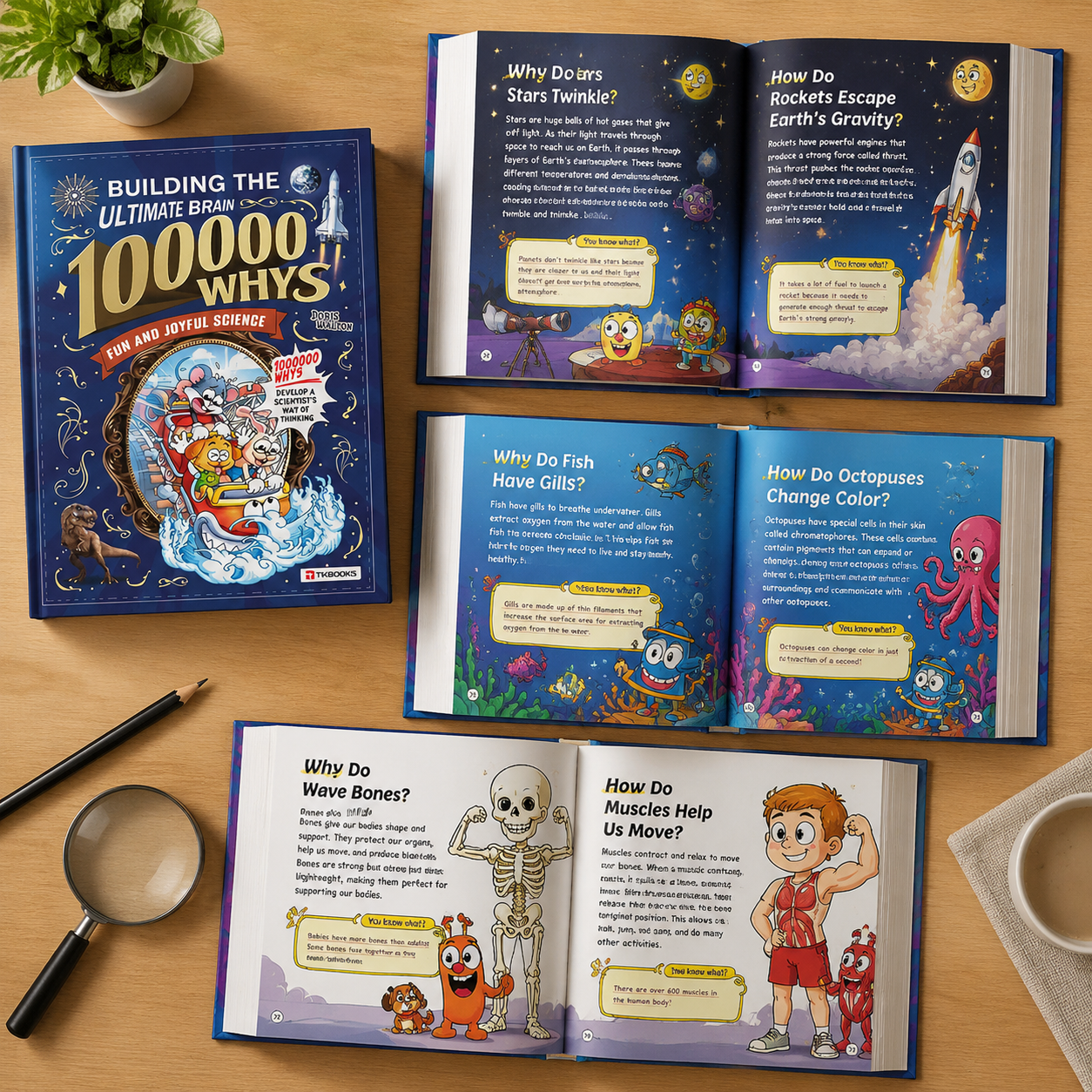
The pictures are the on-ramp, not the ceiling. Open it anywhere and you’ll find a real question — why is the sky blue, how do whales sleep, where did the dinosaurs go — with a real answer underneath, written so it lands for a first-grader and still holds a sixth-grader. And it doesn’t dump random trivia. The questions connect across 12 worlds — space, the human body, the ocean, dinosaurs, animals, weather and more — so one “why” pulls the next, and knowledge actually builds.

You’ve been burned before — the app that “felt like a game,” the box that showed up fun and shallow, the free trial that quietly billed your card in 14 days and then made you fight to cancel. This is the opposite. You pay once and the book is yours. No auto-renew, no app, nothing to remember to cancel. And because the answers scale, the same copy works for your 6-year-old today and your 11-year-old in five years — about the price of one takeout dinner, for a book they keep for the rest of childhood.

Still wondering if your kid will actually use it? Fair — that’s the whole question. So the deal is simple: leave it on the table for a few weeks. If your kid never reaches for it, or you’re not 100% happy, email us and we’ll refund every penny, no questions asked. You’re not gambling on a faceless dropship store here — this is the original 100,000 Whys, a name that’s been making kids into thinkers since 1929, with honest specs, real returns, and what-you-see-is-what-ships.
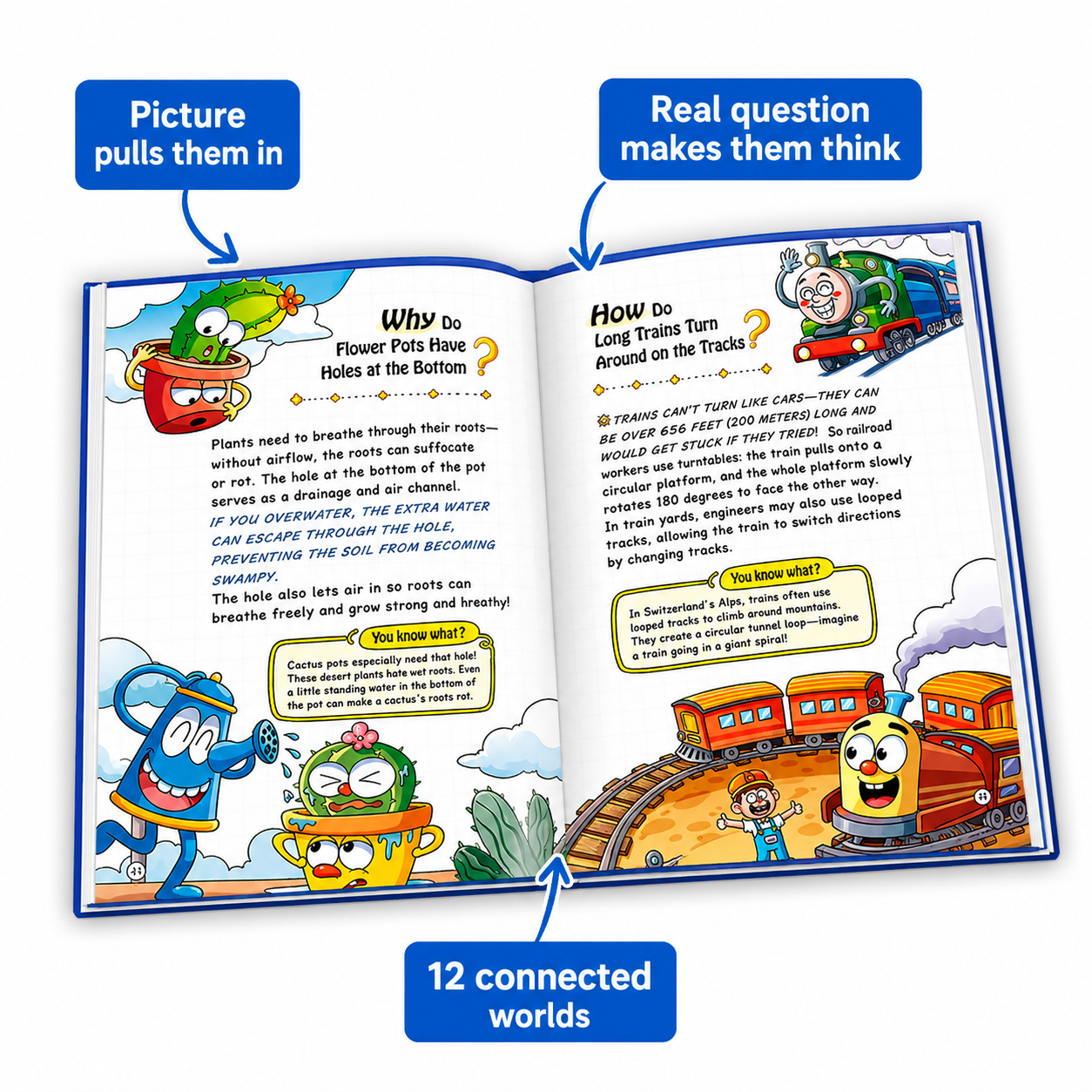
It’s comic-first — and that’s the whole trick. A picture and a real question on every page is exactly why a kid picks it up unprompted. Researchers who scanned kids’ brains during story formats called the illustrated version the “just right” one — it lit up imagination and language where a screen left them passive. (Reported by NPR on Dr. John Hutton’s 2018 study, the “Goldilocks Effect.”)
100,000 real “whys,” across 12 worlds. Not a pile of disconnected facts — real questions with real answers, connecting space, the human body, the ocean, dinosaurs, animals and more. 128 full-color pages, built to be browsed, not assigned.
Trusted for generations — not a faceless dropship. The name goes back to 1929; the computer-science pioneer John McCarthy credited 100,000 Whys with first making him a scientist. Search the title and you’ll find a dozen look-alikes from stores you’ve never heard of. This isn’t one of them.
You’re not trying to raise a genius. You’re just trying to keep the question-asking part of their brain alive — before the screen quietly switches it off.
“My iPad kid actually chose this. He carries it everywhere now — in the car, at the park. Did not see that coming.”
“Bought it for my grandson the way my own grandparents once bought me an encyclopedia. The memories last far longer than any toy.”
“My iPad kid actually chose this. He carries it everywhere now — in the car, at the park. Did not see that coming.”
“Bought it for my grandson the way my own grandparents once bought me an encyclopedia. The memories last far longer than any toy.”
“We do one ‘why’ a night at dinner. The questions are coming back. After two years of one-word answers, that’s everything to me.”
“She pored over it for an hour, absorbing all sorts of facts. No app, no ads, no ‘up next.’ Just a book she didn’t want to put down.”
“We do one ‘why’ a night at dinner. The questions are coming back. After two years of one-word answers, that’s everything to me.”
“She pored over it for an hour, absorbing all sorts of facts. No app, no ads, no ‘up next.’ Just a book she didn’t want to put down.”
“He was shocked at some of the facts. There’s so much in here you can get lost reading it.”
“Worth way more than what I paid. Best children’s encyclopedia out there, in my opinion.”
“He was shocked at some of the facts. There’s so much in here you can get lost reading it.”
“Worth way more than what I paid. Best children’s encyclopedia out there, in my opinion.”